
Attacking Weakness: Learning What This Means Through the Method of Running...
...For the First Time.

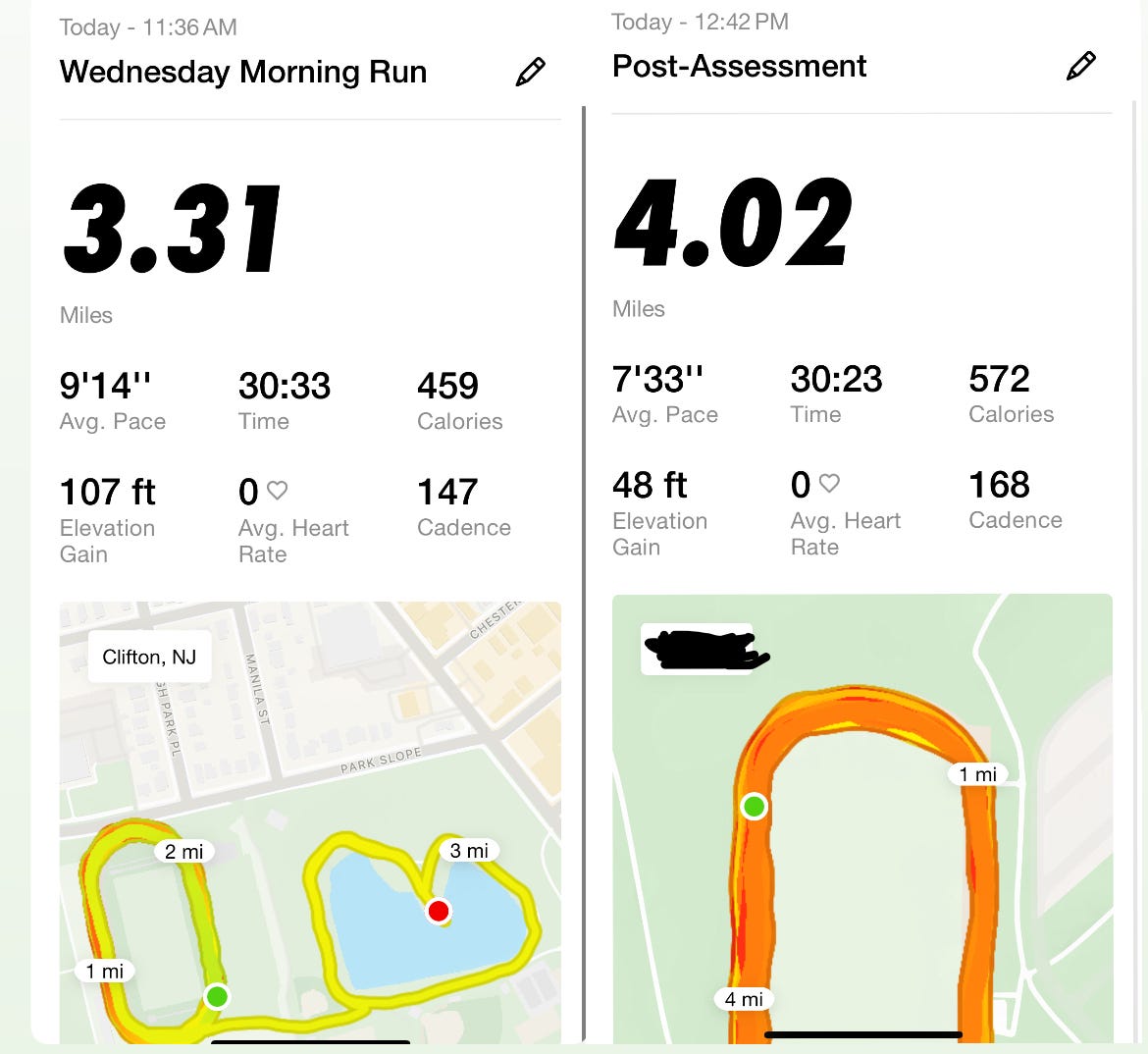
4 months of work. A Pre-Assessment that informed everything else, a super annoyed man, and a Post-Assessment that held fidelity to the beginning. A well designed spiral that showed me I could when I really wished I didn’t.
If I could do this, I promise that you could, too.
Working in the sport of wrestling, it is very often that I will encounter kids crying, fighting desperately to breathe, and failing miserably at what started as measured attempts to make it through a practice. The dispassionate countenances on their faces melt away once the temperatures rise and others in the room begin dialing up intensity in order to begin stepping into the shape of the wrestler they want to become that year. One particular case saw a student come into the room in his second year in this country, nearly 400 pounds. From the first moment of practice, and to every moment I saw him in the hallways, I noticed the issues he had moving. Feet, hips, arms a mess as he struggled to stay upright and survive every “next moment” of conditioning in the training room. Attributing most of this to chronic video game play as well as a mostly sedentary lifestyle, his emergence into violent sports forced him to begin learning how to use his body as a weapon, and this all started with surviving the athletic components of a wrestling practice that had little to do with actual wrestling techniques.
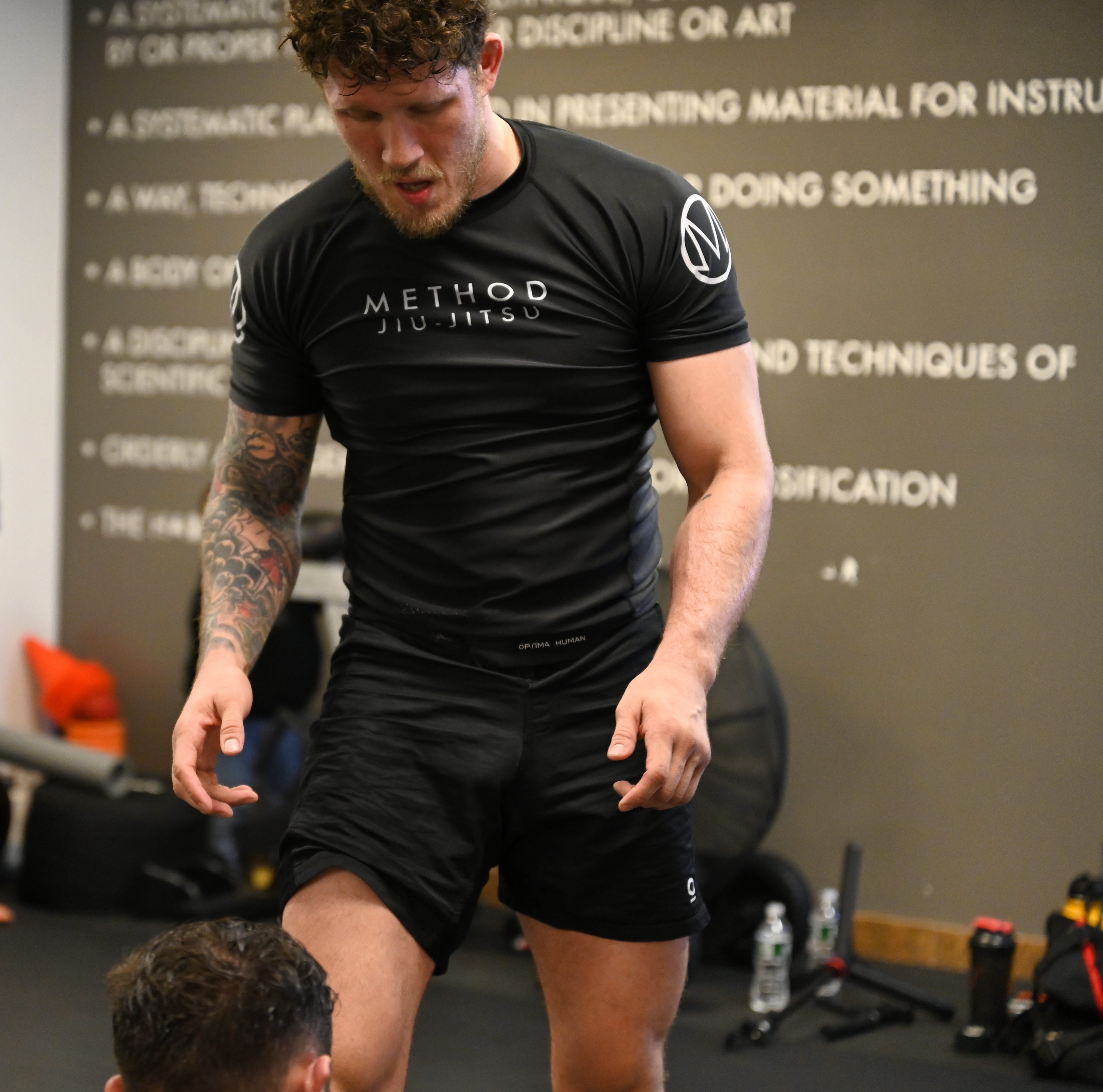
You’d be hard pressed to find a sport that reveals more about your athleticism and physical competency than a hand to hand combat sport against an athletic opponent. Adapt or die—and some people earn a Black belt without running once :)
“Just keep driving your arms and picking your feet up–we are just looking to survive today, you can quit tomorrow–no problem”. Using the dual strategies of compartmentalization and minimalism of instruction carried D.D. through what surely should have been an early exit from both sports, especially since every conversation that 9th grade year welcomed his quitting at the end of every practice–although, as it usually does, my assertions of “one more lap around the room and you can just leave” became a young man curious of what is left in his heart. A lot of different ways to attack weakness in a person fighting to be their best selves–giving them that out, early, and then moving forward with practice after they repeatedly survive the quit-qualifying action happens to be particularly effective in my work.
He emerges from this an accomplished varsity wrestler, college football player who excelled at the tackle and guard positions–all without me overdosing on what my brain jumped to nearly immediately when I saw him running–gait, over-internal rotation as he takes steps on the runs, arm action not in sync as he moves forward on accelerations, and so many other components that were being hammered into my head as points to fix. “Dangerous things” that of course each had their own separate $300 course which would prescribe you a set of steps to diagnose and “cure” that were available at nearly every turn as a new coach learning in the city that is perpetually inundated with some of the greatest performance coaches in the world, and also some of the most skilled crooks slinging their unnecessary product that traps athletes–and their coaches–into thinking their guys are broken in ways that NEED to be fixed and fixed NOW.
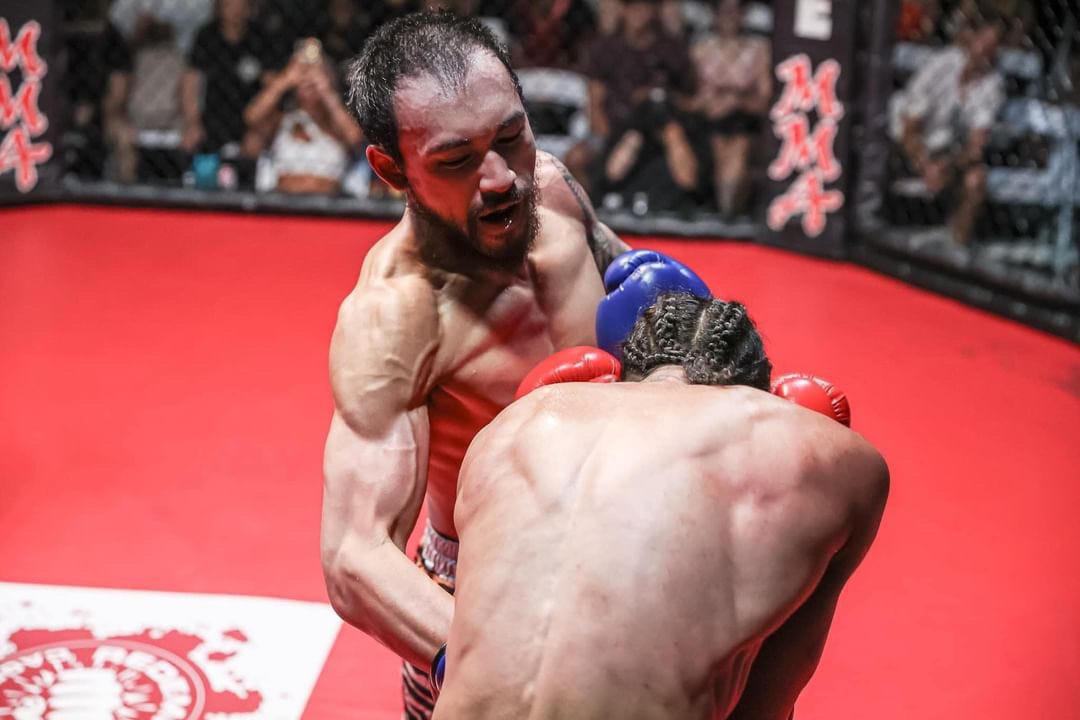
The more years I am in this game, I take these fitness" “consultants” or whatever these fucking crooks call themselves less serious by the expiring minute. People have created a platform for screening problems that they are making up to scare people from doing things that they love. Insane.
Many of you familiar with my writing of systems will often see the “attacking weakness” section of programming cover the conditioning portion of the training session. For me, I have–since high school wrestling–opted to do anything and every modality that is not running to cover the conditioning portion of my training. For years, since the inception of my time as a performance coach, I have been programming running work for all of my people and athletes. And, thankfully for my obsessive pre, post, and analysis that tethers all of those numbers together–I did it well. I found myself falling into the space where I became “the person” for people looking to make sure they were prepared for all different facets of military, police, and special forces physical exams. Objectively, high passing rates led to word of mouth recommendation and carved me into a niche in which I worked closely with populations like those mentioned that hinged on running as a locust point for a condition to win. To be fit enough, to be tough enough, to be athletic enough, to be able to lead.
I never ran. I didn’t run in wrestling, avoided any sport that was dependent upon running, and I hated racing people in the street. I abhorred it. It was boring, it was difficult, I was slow, and I was convinced I was always doing something wrong. In April of 2024, I was hired by a 27 year old man that was taking the next step towards selection for Special Forces–his issue was that he hated running. Before I answered him, I thought back to DD in the wrestling room, my many police academy and military men and women that see running placed at the forefront of the other physical attributes in carrying, lifting, and combat that they needed to sharpen to result in one less major thing to worry about. I realized the responsible thing would be to finally get this done, myself.

This was, in fact, a lie. The store that I wandered in to after that preliminary 15 minute run felt like a twilight zone episode. I am happy I had my phone to capture this hilarious sign (the bread was literally beside this—and so was one (1) banana).
Testing In–15 and 30
The objective and quality that would matter most to my people would be improving the threshold. I made the decision to commit 4 months of training threshold for running, and as soon as I wrote the preliminary framework, I set out for what was supposed to be my 15 minute opener at a maximum pace. The rationale? See when the wheels fall off and how my body, mind, and tactics respond.
I did not record this on heart rate or on the free Nike Run Club app, but I wish I would have. About three minutes in my mind began quitting, my legs felt impossibly heavy, and I was running on grass back and forth just to try to lessen the perceived impact of each step. What I did not do was do any justice to what I thought was my level of fitness–my performance was abysmal, I felt weak, and knew that I was very upset with myself for leaving that heavy of a blind spot in my level of preparedness. A lifetime ago in my time strictly powerlifting, I remember running to catch a train that I was late for and swearing to myself that I would never be late again because I nearly had a heart or panic attack as a result of how unprepared my body was to run under pressure for more than 10 seconds. That was nearly 10 years ago and nothing had changed. As embarrassed as I was, once the 15 minutes elapsed, I held on to the idea that I never stopped and kept placing one foot in front of the other. I took that victory and wandered back to my mom’s house.
Two days later, and with a real understanding of how badly prepared I am for this impending program, I grabbed a training partner that I knew could use this program as well–a blue belt that did not grow up playing sports who thrust himself into full time jiu-jitsu for 4 years who did not have a wide athletic base–and set out to complete a 30 minute threshold test-in that would inform the remainder of the program. We chose a track that would promise level ground, and set out for work. 30 minutes. Maximum effort the entire way through. One foot in front of the other like I told DD, and the bar for performance grazing the floor with how badly I disgusted myself days before–I was ready to walk away a better man.
I have been lucky enough to have been pointed into the right directions as far as understanding programming–specific to context or event, gait, body mechanics in different run formations. I programmed well, even coached body positions that, when paired with well selected weight room work, resulted in strong returns on performance for skill positions regarding football. BUT.
I. Yo. ME. Alcides Jemetrius Aleman.
Cannot run for shit.
30 minutes felt like six hours under a fierce summer sun, and what looked like a never ending blur of red under my feet culminated in the following–
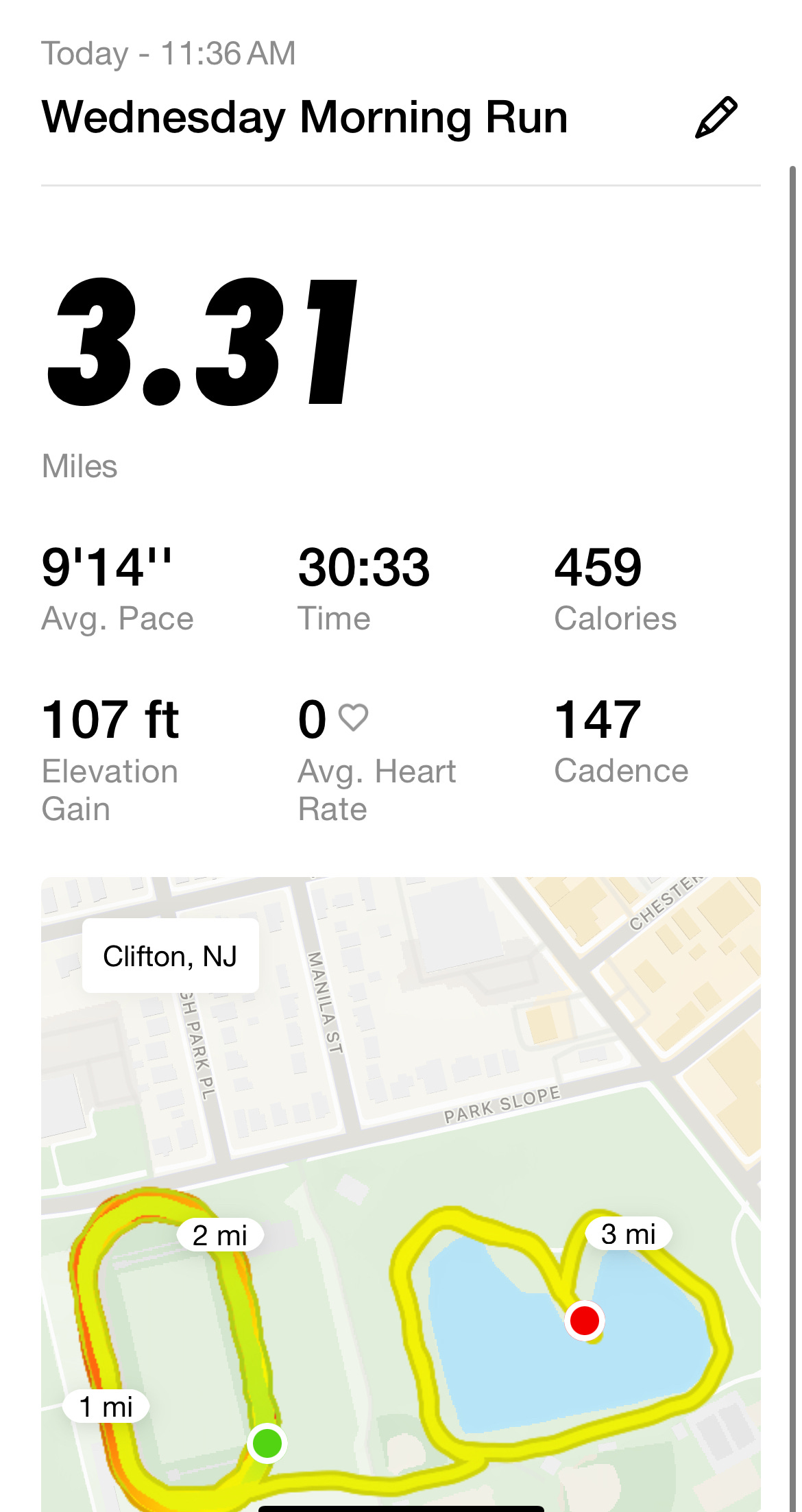
30 Minutes for this threshold test-in giving everything I had.
3.31 miles.
9’14 per mile average pace.
Seemingly not so horrible. If anything, this article serves as a reminder that if you aren’t using a heart rate monitor you are guessing your conditioning. My result after 30 minutes of running–
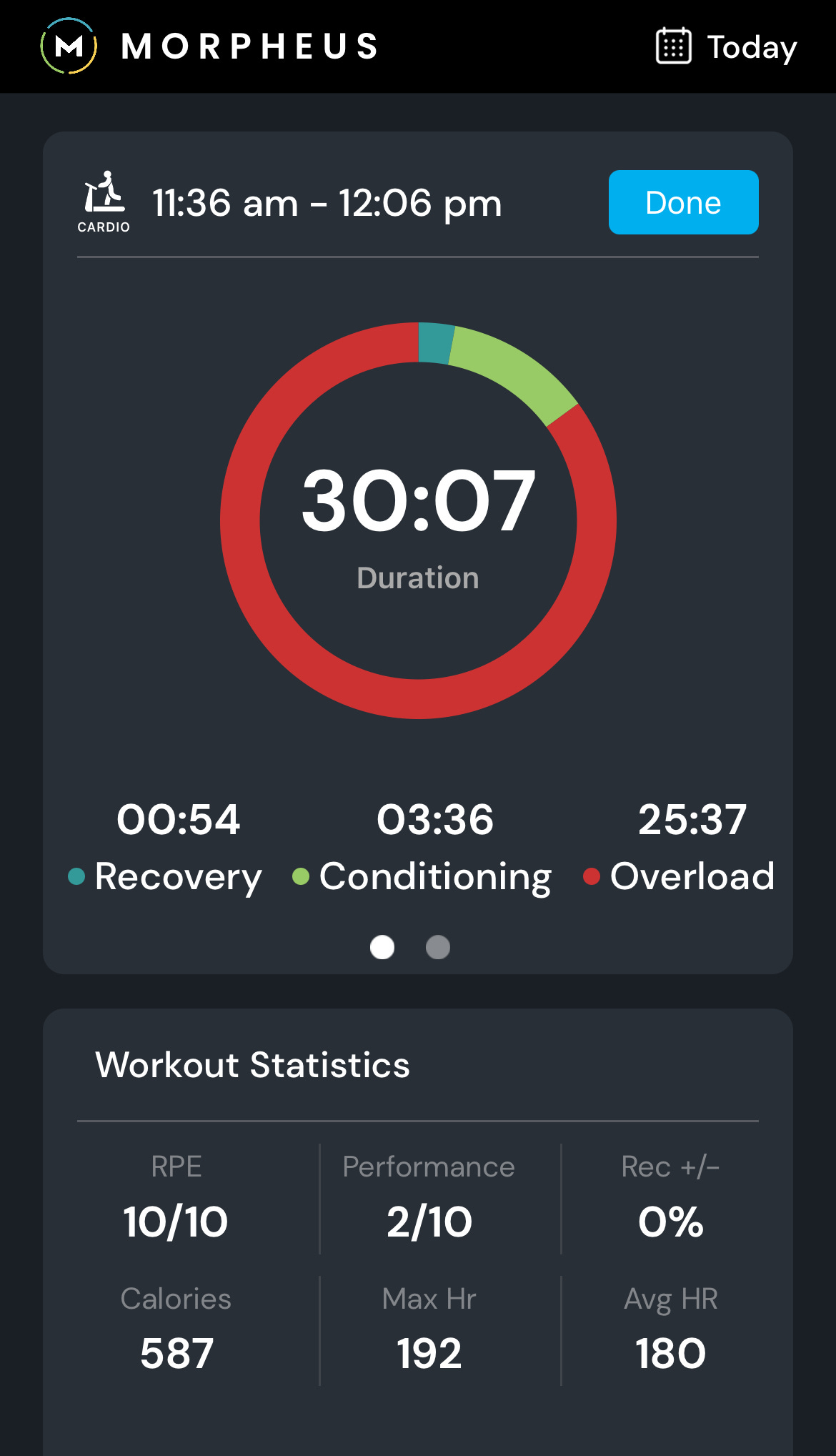
25:37 spent nearly dying. A lot of that at 192 beats per minute, with an average overall heart rate of 180 beats per minute. I was in a normal “zone 2” state for 54 seconds, and working hard but normally for 3:36.
This confirmed all of my suspicions. I had a lot of focused work to do.
Ali’s results were worse, and a day later he would say that he “broke his foot” and dropped out of the program. Much like the bike ride, I face a monolithic feat on my own.
The first sessions
I am truly not used to performing so badly at something and being legitimately concerned for what will come on the next training day (unless it has something to do with math), so this first week was extremely difficult for me. My entire training schedule included two very difficult bike rides a week as I was getting prepared for the big ride that would take place in August, and three kettlebell training sessions to address strength using my minimalist True Chill programming. What would help particularly with the latter would be the strict focus on conditioning and control during long bouts of repeated effort under load.
Running sectioned itself out into 3 sessions a week, all of which would wave effort depending on what my pre-assessment result was.
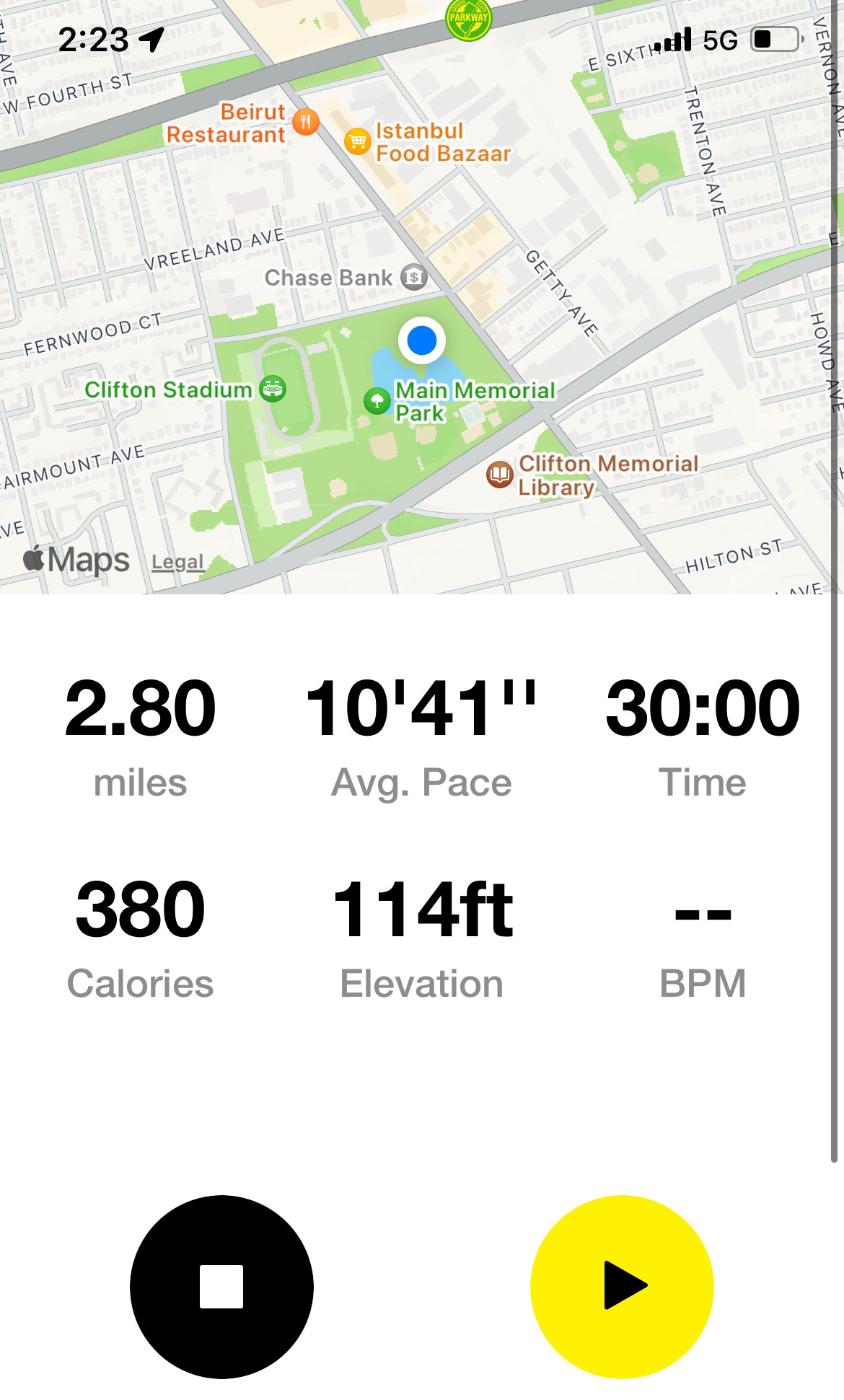
Session one saw my average mile pace be slowed down by a minute and 30 seconds, and maintained at that pace for 30 minutes. The session was very difficult. I walked away with a max heart rate of 178 beats per minute, an average heart rate of 166, and 2.80 miles ran in 30 minutes. I tried hard to maintain the pace as that same sun beat me down, and my base effort was arm action and one foot in front of the other.
Adapting: Neighborhood Runs as The Natural Course to Victory
About 4 sessions into this program, I decided the track was not for me. It was too easy for me to set runs off for later, after training, or even the next day because I would have to get in my car to get there. I needed to treat this like my weight training–a corner of the house or it won’t get done. Although my apartment complex has a pretty obvious incline, I would sacrifice that difficulty for the ability to start the run upon stepping out of the front door. This made a dramatic difference in difficulty the first few runs, but I know what I am capable of and–finally–it broke through in running.
I often speak to my consigliere and Wildlife captain Joseph Tyrone Mudrak about our physical qualities, and when considering my total physical profile containing combat sports, hockey, and resistance training and weaponizing it,–I can best be described as a Madball. It’s not a flashy weapon, it’s not expensive, and it won’t get the job done in one shot, BUT it won’t break, it’s insanely reliable, and it’s going to keep coming forward infinitely until it bulldozes you. Once my body began adapting to the added, impending difficulty of that incline, my nervous system began placing me firmly in a”fight”, and I began overcoming and doing so efficiently.
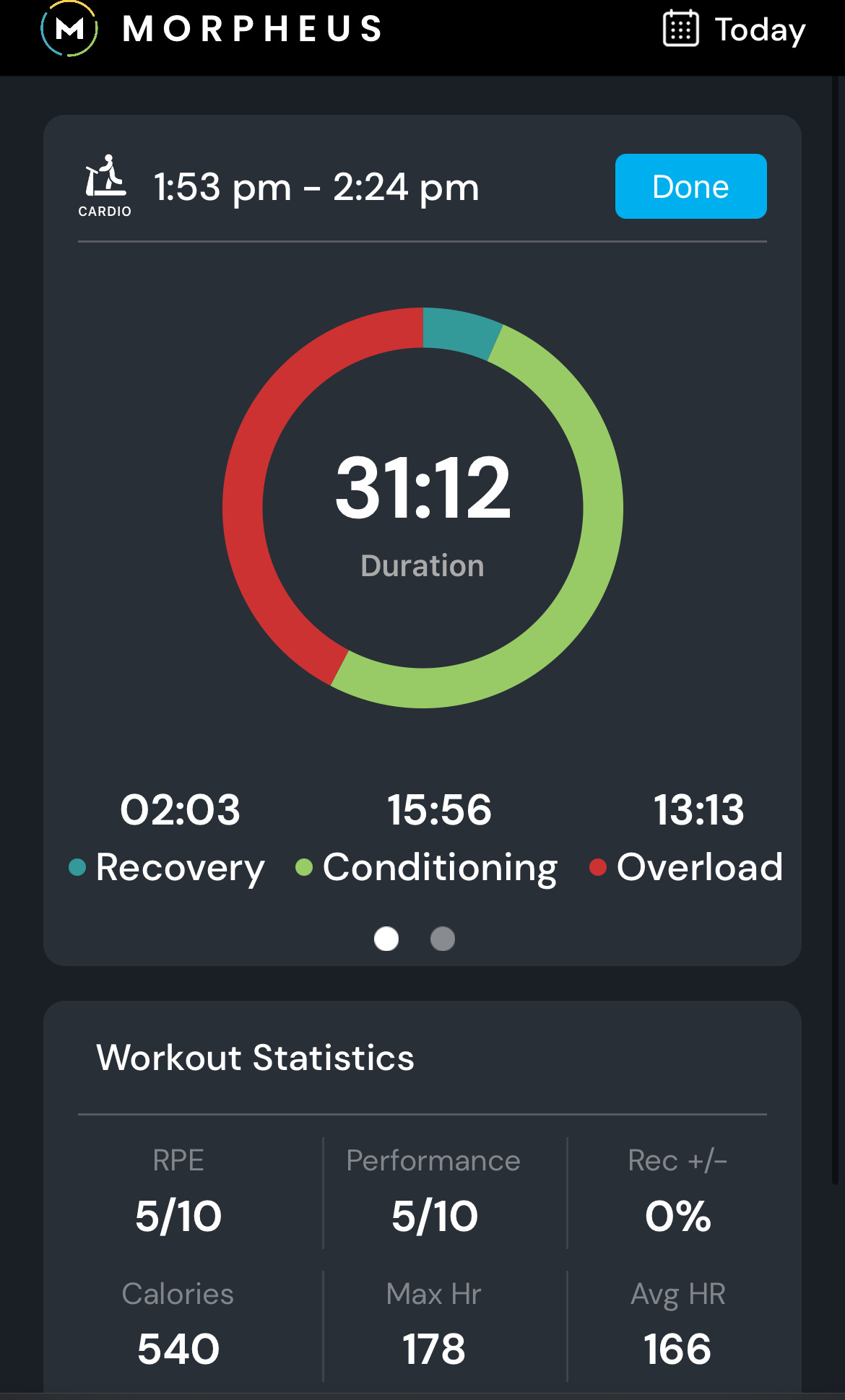
First, I thought this was a hiccup and just my body responding very well for a deload session (no time spent in “overload”, all time spent in “recovery” and “conditioning”--13:28 and 7:18 respectively).
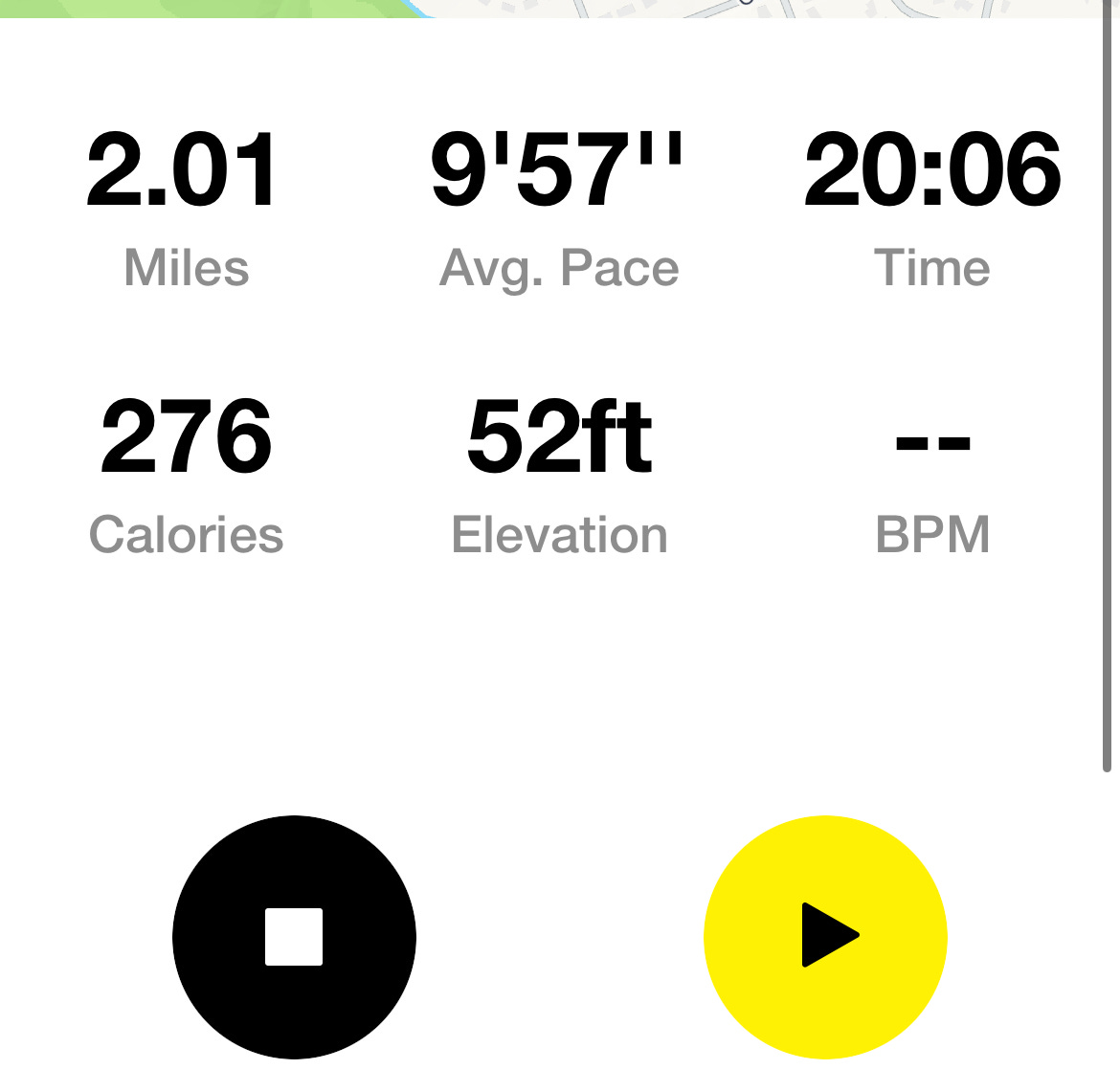
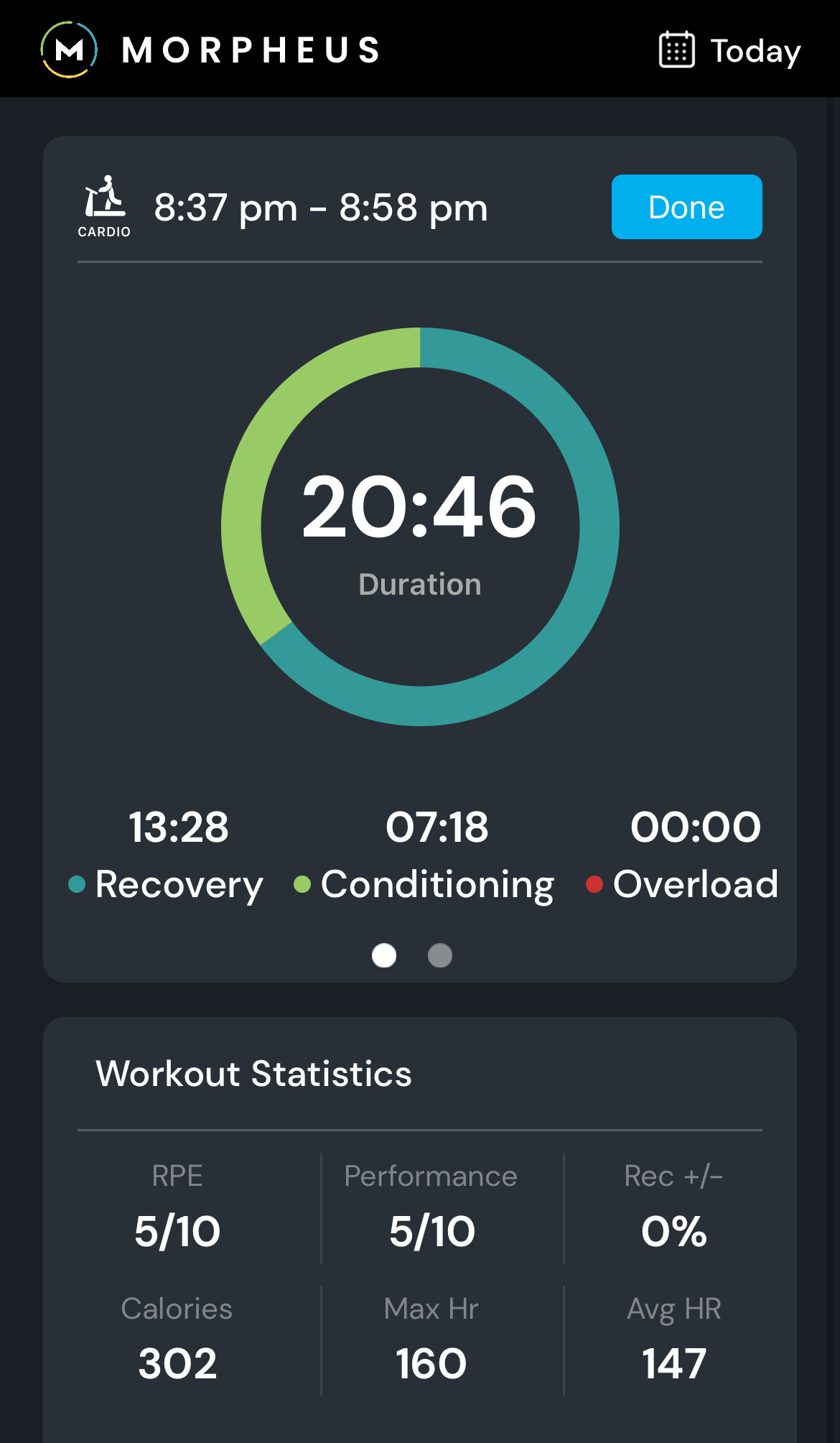
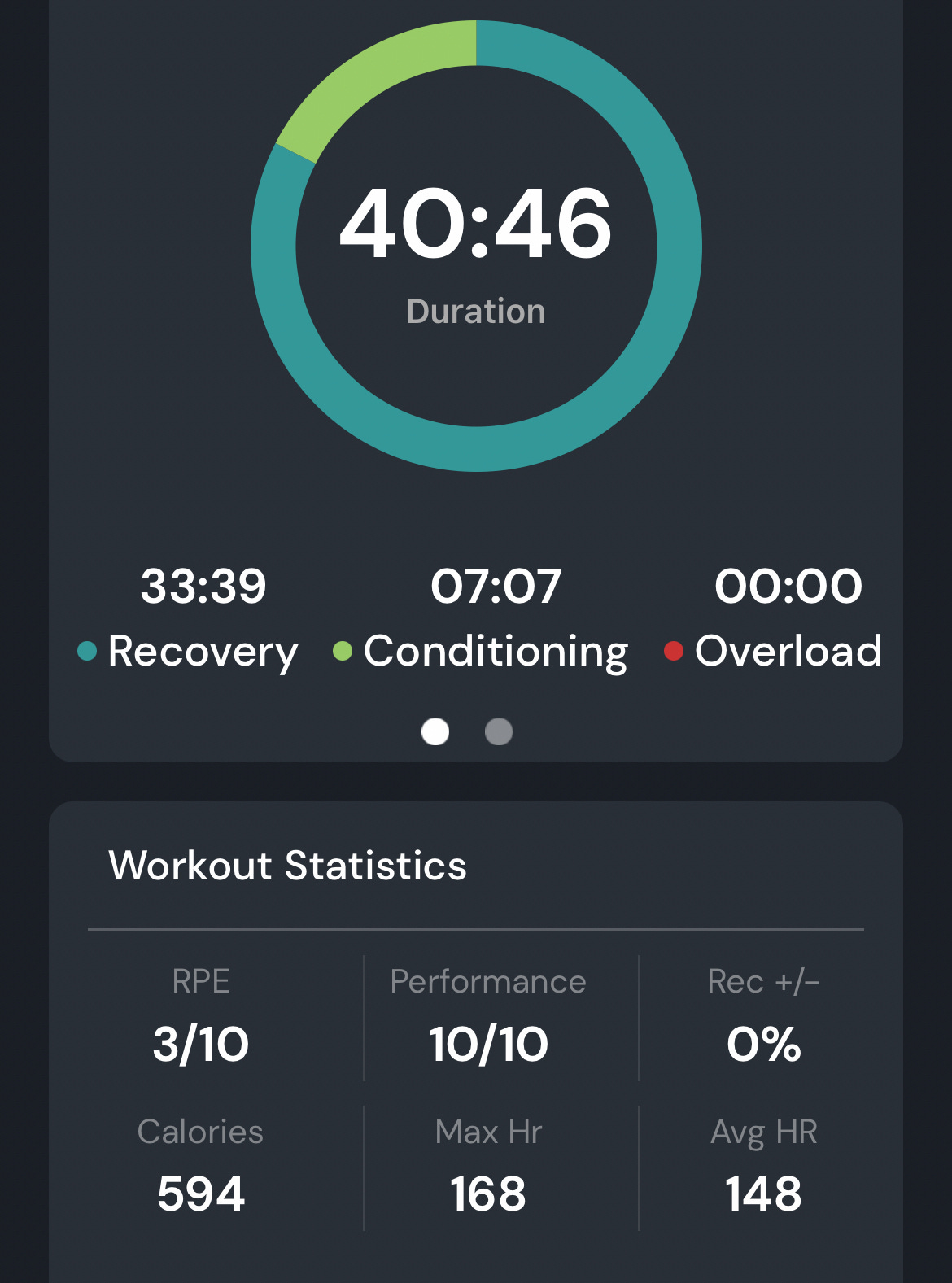
But then the hammer of the first 40 minute run at 45 seconds above the tested in average pace.
NO TIME SPENT REDLINING! NO DEATH! ALL CONTROL! And best yet, an average heart rate of 148, with 168 beats per minute being the apex of output, with 33:39 spent in recovery, and 7:07 in “conditioning”.
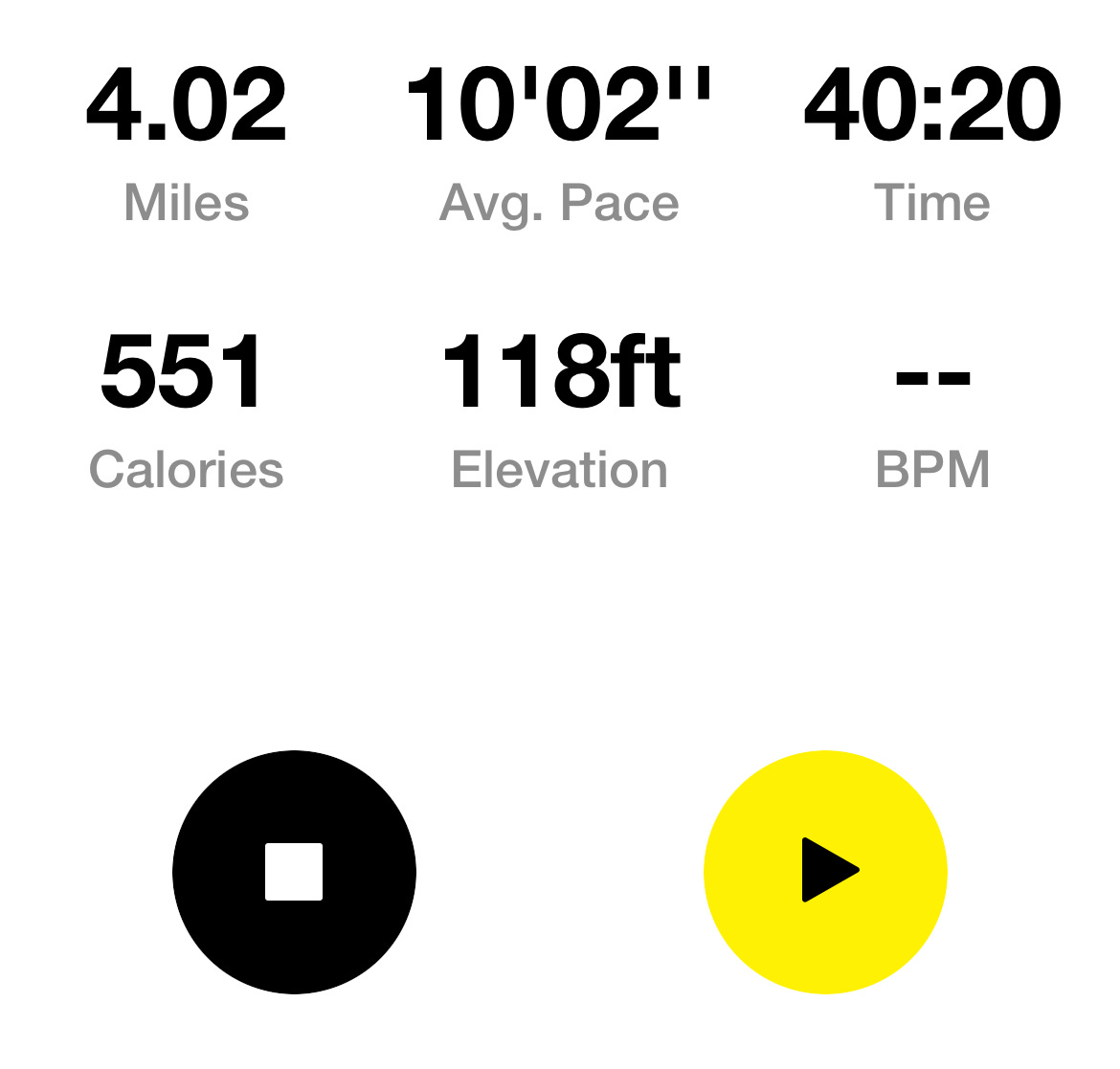
Even if the program ended here, I had already made massive strides in what I have done for so many others and given myself the gift of not allowing myself to be a victim in a physical situation.
The Way Out is Through
The post-assessment after 4 months came on a would-be deload day. I don’t do that often but my focus was quickly shifting to making my strength work much more difficult and I felt ready. I returned to the same track, on a similar 90 degree day, and came ready with music and no shirt (which I wanted to do desperately mid-run but I was so mentally and physically broken that I couldn’t bring myself to do any other task that wasn’t just moving forward). As soon as I began, I did my best to place the same foot in front of the other, but with the 4 months over reinforced Madball strike that was afforded by the program’s waves of scheduled pickups in speed, opening of stride, and seconds above or below pace that had been implemented so often with everyone except myself. That changed in the next 30 minutes.
After 30 minutes of running, my results were–
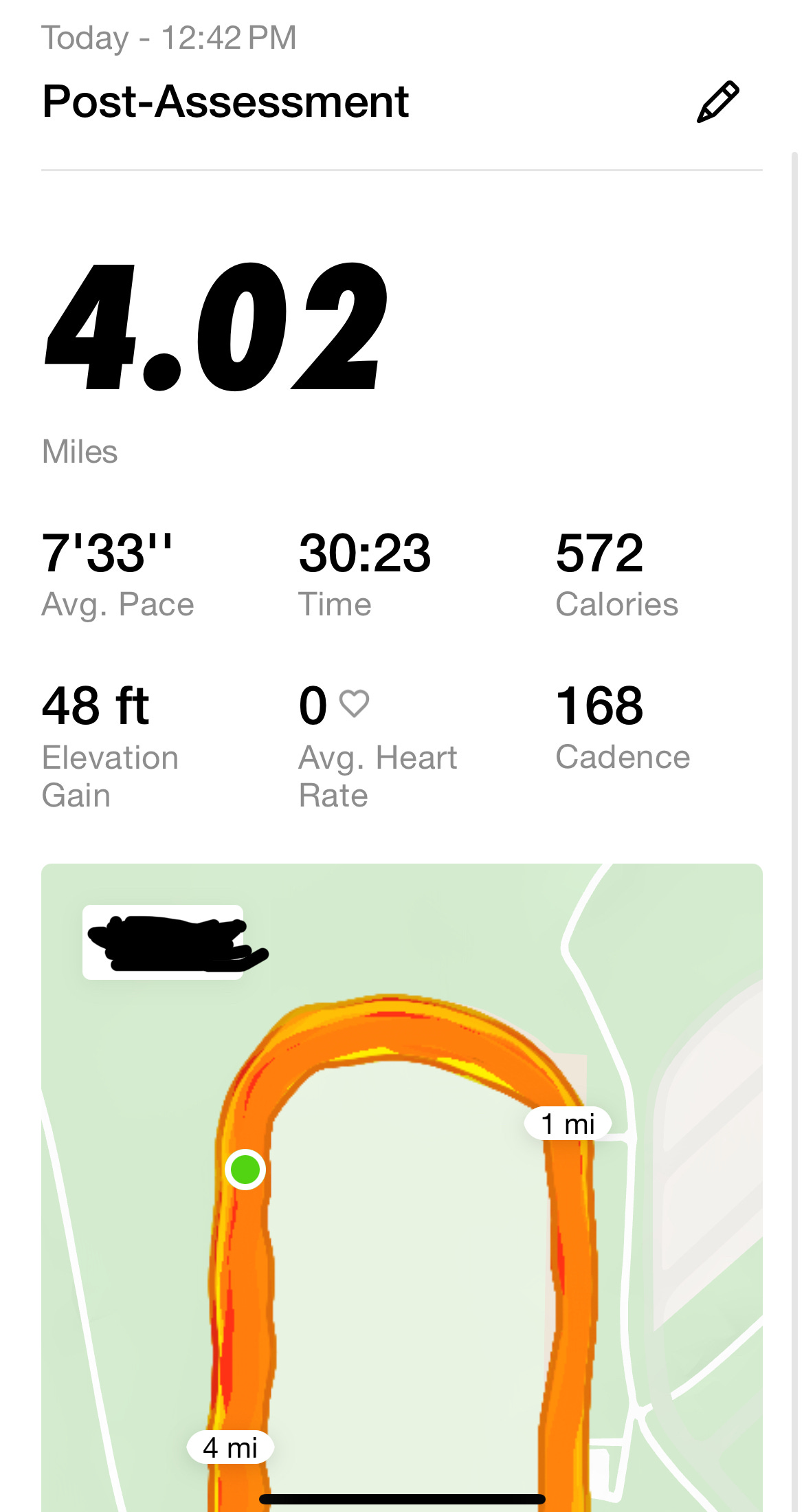
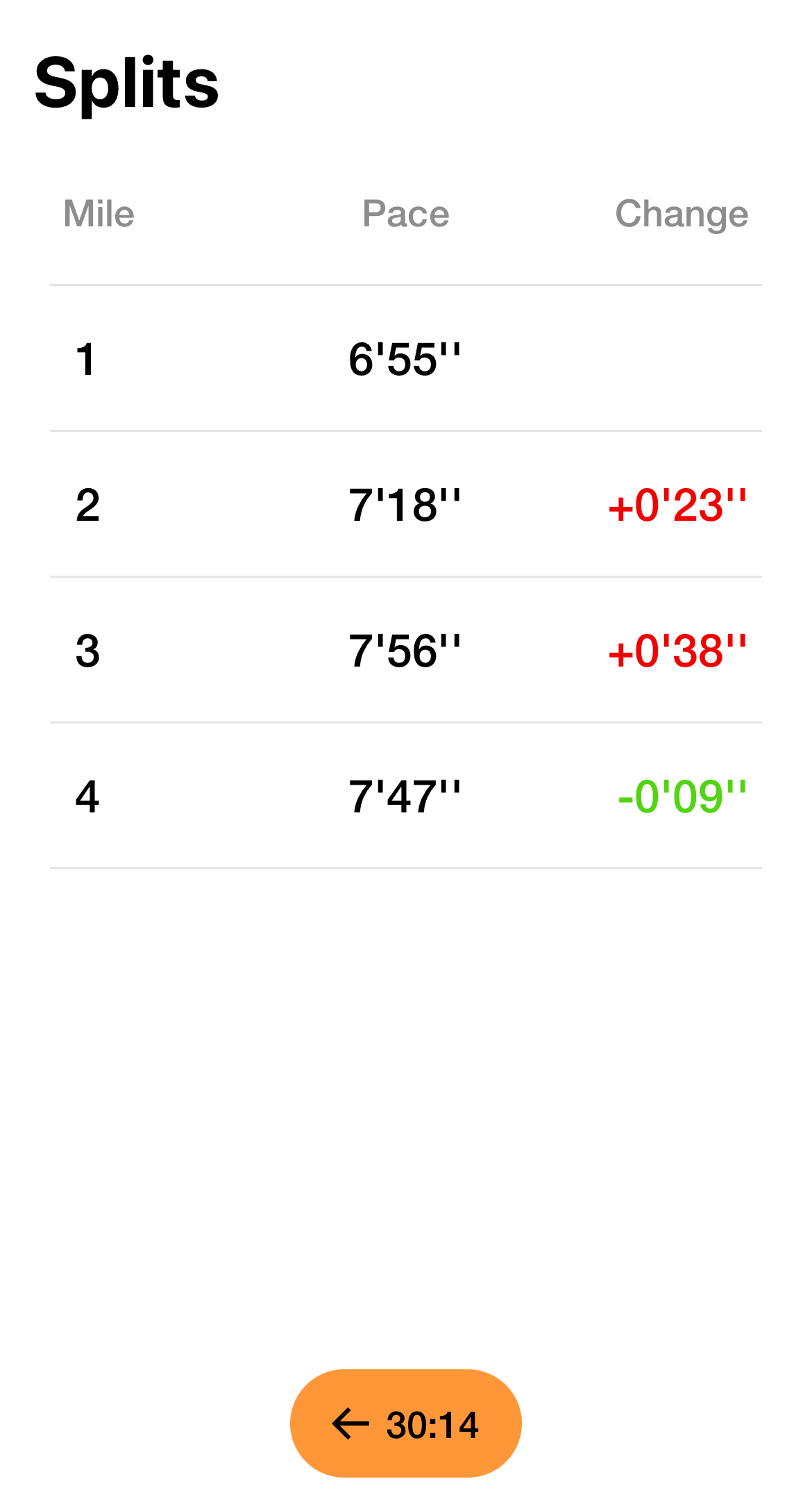
4.02 MILES!!!!!!
An average pace of 7.33 minutes per mile!
The first mile ripped through at 6:55!
The slowest mile being 7:56!
And a completed 4 straight months of work that did NOT go in vain.
I aimed for 8:30 average pace and even that I considered would have been a blood-bursting effort that would have felt much like the pre-assessment. Not the case.
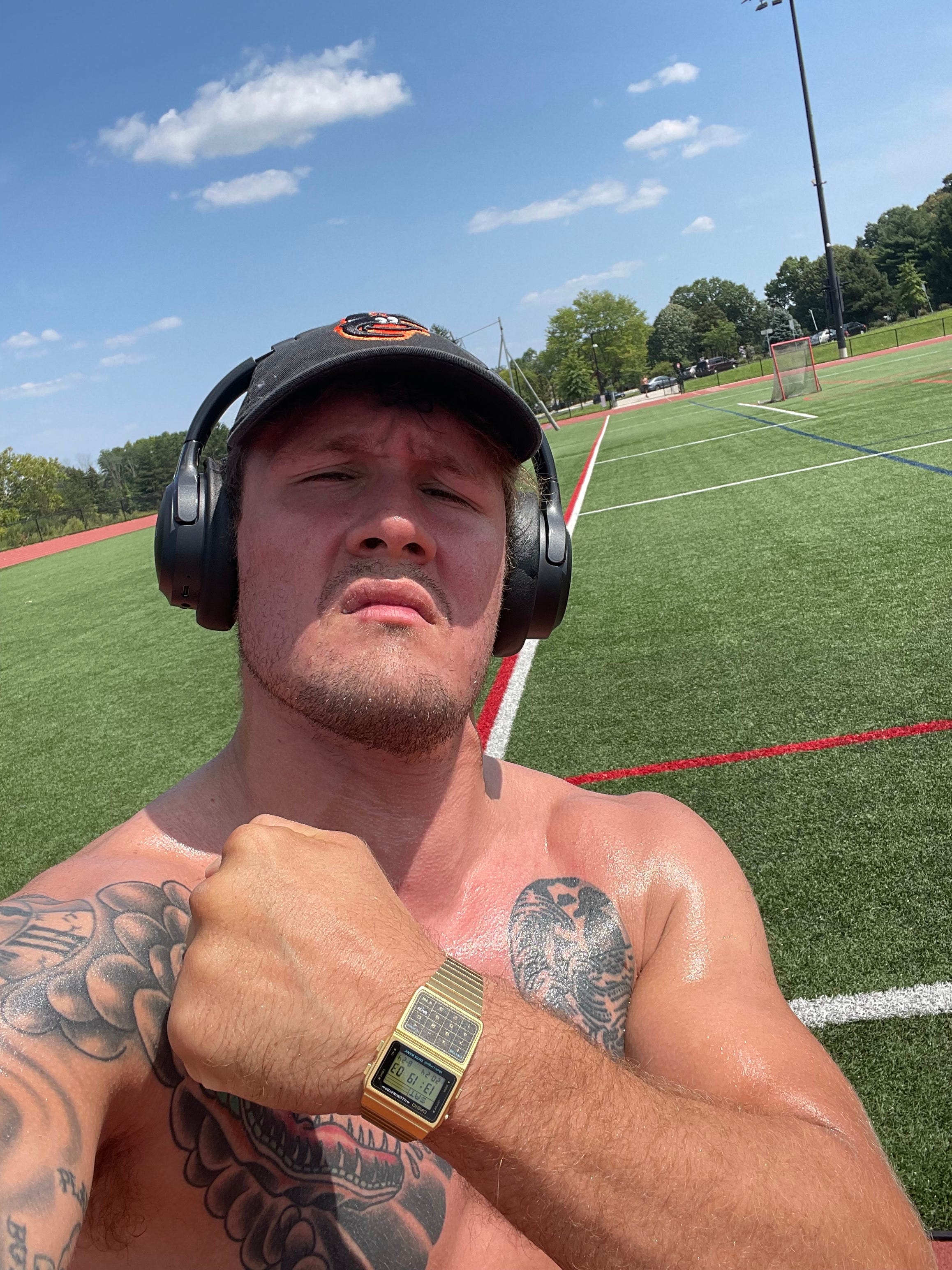
Proud. Casio 500WEG shining in this beautiful accomplishment.
I am so proud of myself for this, and the absolute greatest part about it is that this structure has been a mainstay for the past 5 years of Wildlife’s existence, and what it has done for everyone whether they are heading into the academy, selection, an offseason wrestler, a regular person looking to lose weight, or a guy who really does not want to be at the mercy of his physical limitations when chasing the next train (And you know I’m going to be late, I’m 100% hispanic). Out of all of the physical milestones, this one was arguably the most important because I truly was unsure whether I could improve this quality or not. Thankfully–the virtues of strong program design lie in something reliable, adaptable, and work that overreaches just enough to recover from before stressing the body again.
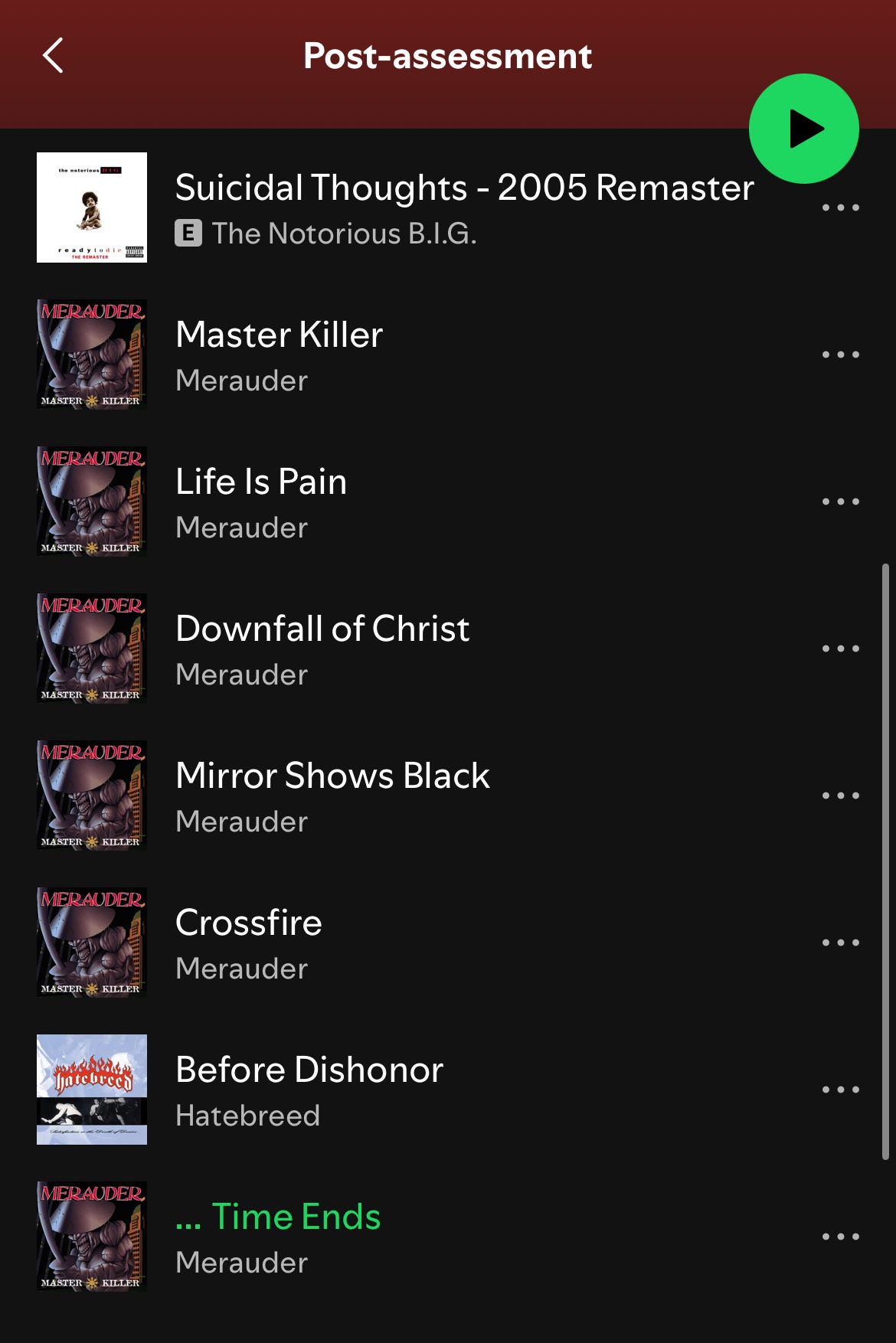
Had to bring the tracks out that would be playing if I was armed with a sword and told to defend my home base in an apocalypse.
Similar to the Patreon work, I love the framework of this approach because no matter how difficult the work is as written, it is possible–as this is determined in the Patreon by the user choosing kettlebell size, in the pre-assessment for this work.
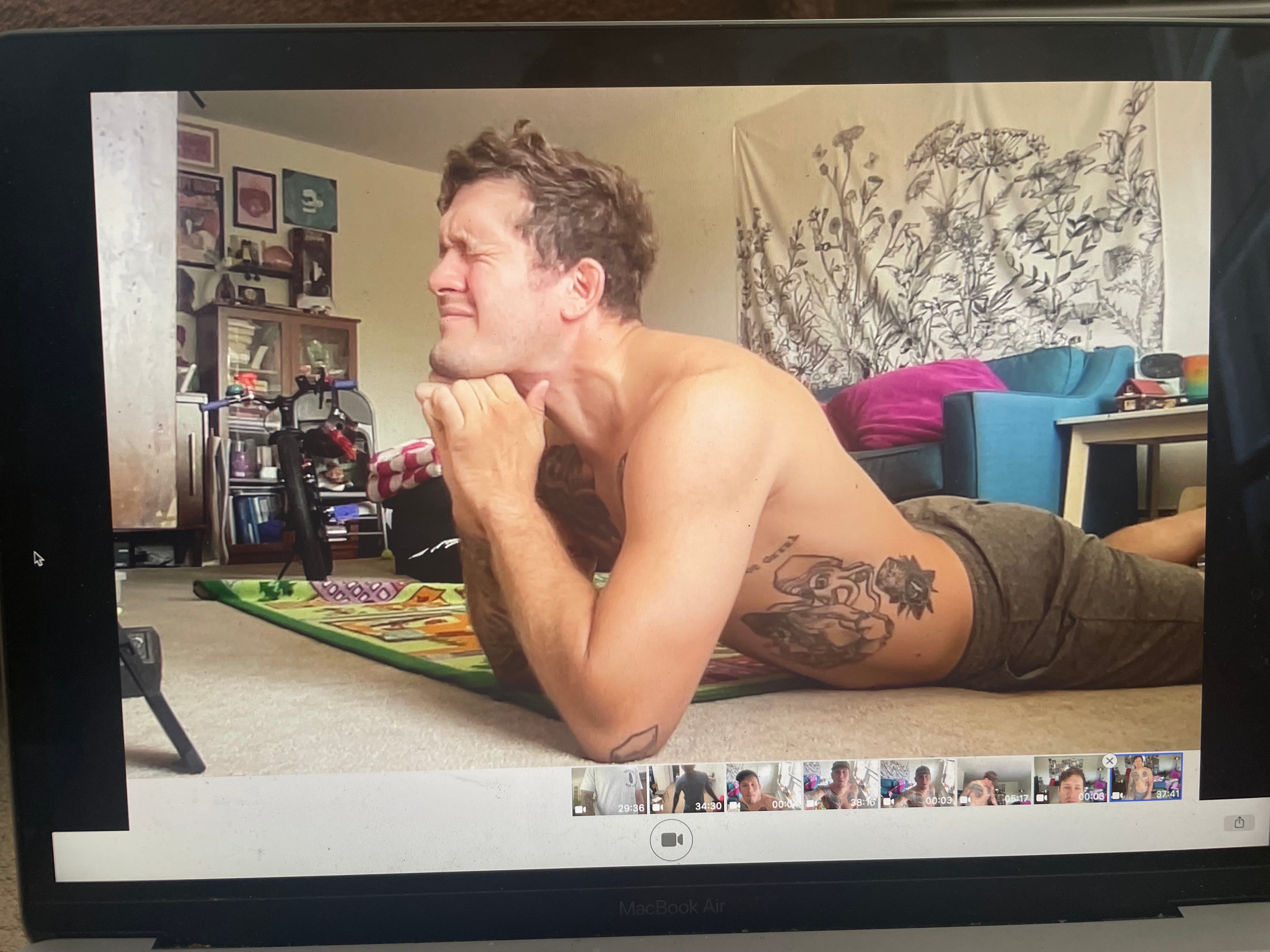
The Patreon work played a major part in keeping me in one piece—particularly the hyper focus on the neck, hips, and ankles.
No matter what or how much depth and breadth people have at their disposal as far as theory and mechanical understanding, 99% of it falls apart or amalgamates fully when the foot hits the gas–THAT is my coaching style, and THAT is how my people, including myself, win.
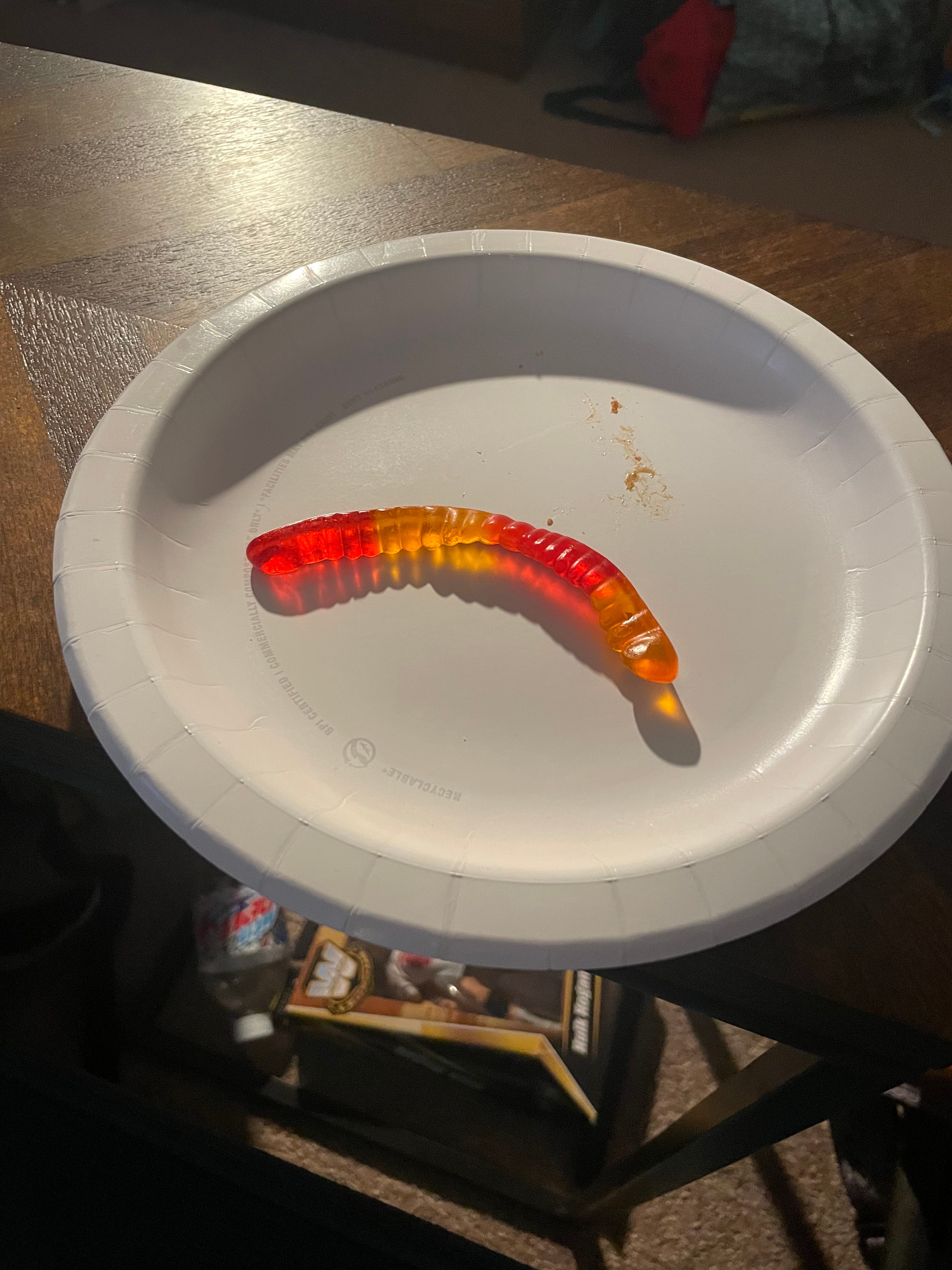
I would also like to add that, often, this is my dinner. So I could be a lot more efficient and look and perform the part probably a hundred times over if it weren’t for me eating like a child.
So, ultimately the mirror is held up to you after the pre-assessment. The program itself sees the necessary nuances to allow for proper intensity, recovery, and volume–but are you able to occupy that space mentally? Are you willing to become uncomfortable. I hated every second of these 4 months, but when I hold up that mirror I know who I am, even if I needed to be reminded this time around. The work is brutal, but in any case with a highly effective process for something important–wouldn’t you endeavor upon something difficult if there was enough data to prove its ultimate efficacy, if it could be promised that you wouldn’t be wasting your time. All that’s left after you’re first robbed of your zeal and toughness in the pre-assessment is the mirror–are you who you say you are?
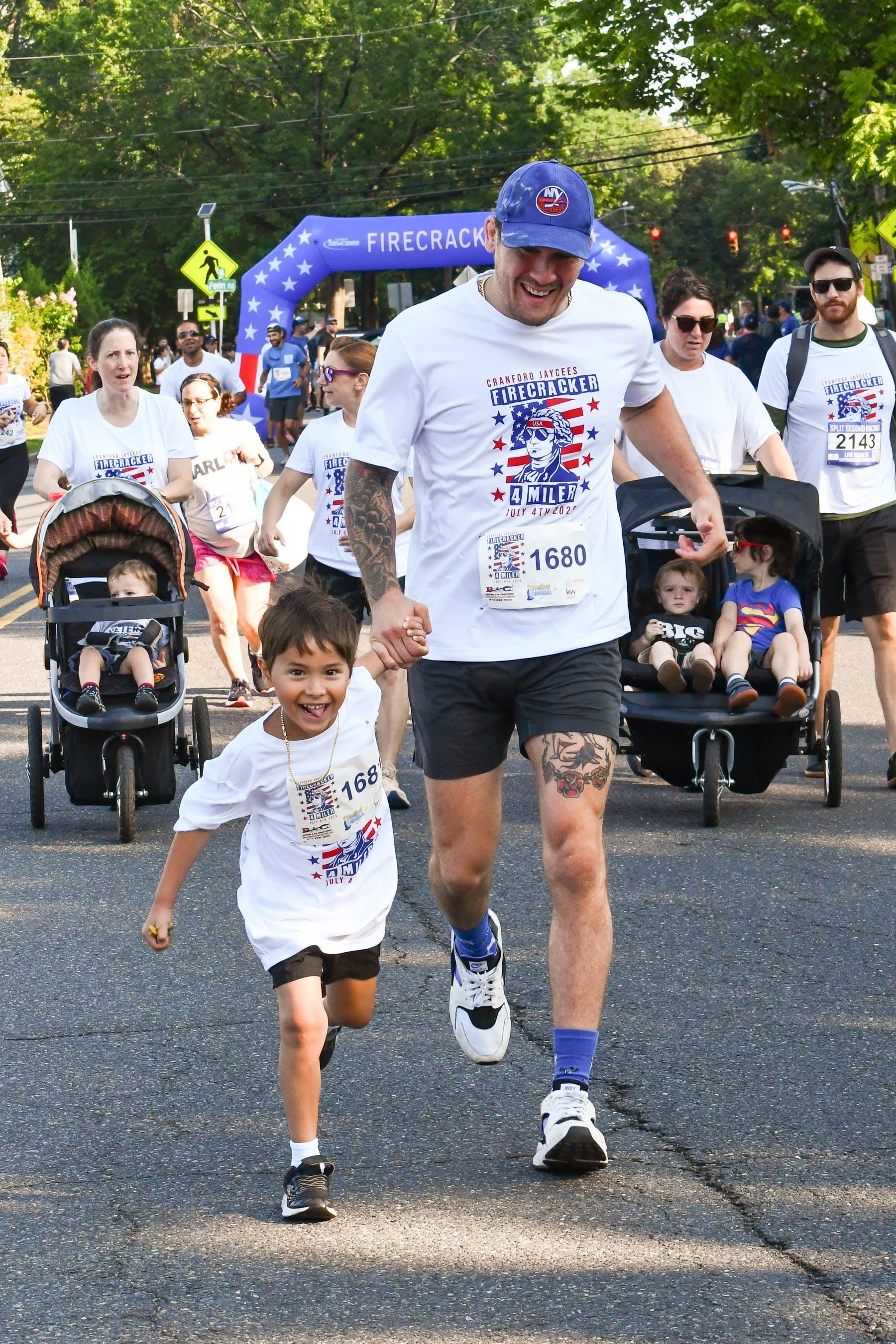
I guess this story had a good ending—I don’t abhor running as much as I did before, mostly because I know I can put up some respectable time. Also, this run pictured was only a mile—thousand people registered, somehow they still captured this little guy. Special.
This programming is available and packaged with minimalist strength work on TrainHeroic, in 2 parts: It is titled “Kettlebell Conditioning for Jiu-Jitsu”.
https://marketplace.trainheroic.com/workout-plan/program/aleman-program-1715869590